

1.Digital Marketing Fundamentals
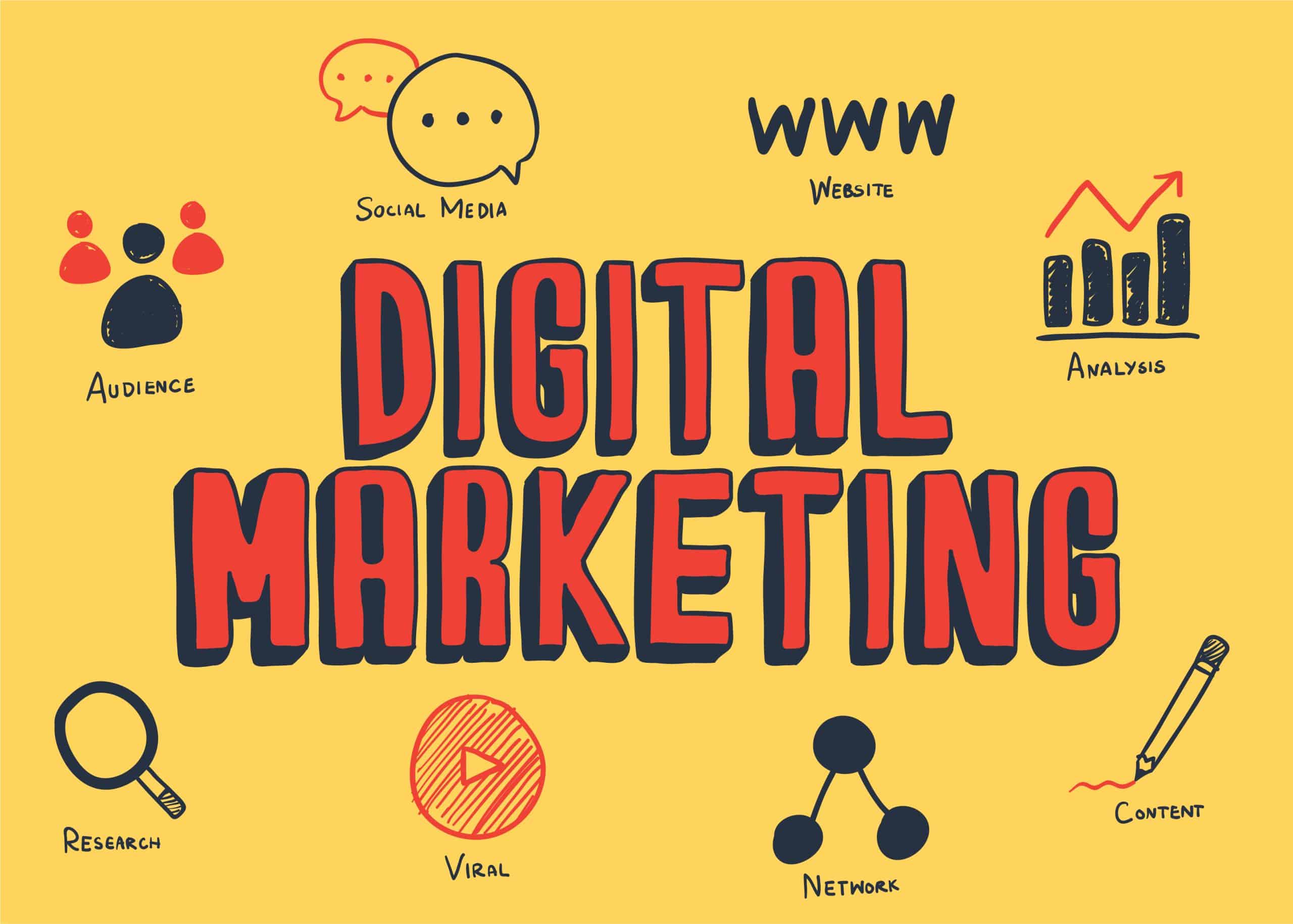
Digital marketing is one of the most effective ways for businesses to reach customers, build brand awareness, generate leads, and increase sales online. Unlike traditional marketing, which depends heavily on channels such as television, newspapers, radio, and billboards, digital marketing uses internet-based platforms and technologies to connect businesses with their target audiences.
What Is Digital Marketing?
Digital marketing refers to the use of digital channels, platforms, and technologies to promote products, services, brands, or businesses. These channels include search engines, websites, social media platforms, email, online advertising, mobile applications, and other digital platforms.
The main goal of digital marketing is not simply to get more website visitors. A successful digital marketing strategy helps businesses attract the right audience, build relationships with potential customers, generate qualified leads, increase conversions, and retain existing customers.
For example, a business may use SEO to appear in Google search results, publish useful blog content to attract visitors, use Facebook or Instagram to engage its audience, run Google Ads to generate immediate traffic, and use email marketing to nurture leads. When these channels work together, they create a complete digital marketing system.
How Does Digital Marketing Work?
Digital marketing works by connecting businesses with potential customers at different stages of the buying journey. A typical digital marketing process starts with understanding the target audience and identifying their needs, problems, interests, and search behavior.
Businesses then choose suitable digital marketing channels to reach those people. SEO and content marketing can attract users who are actively searching for information. Social media marketing can build awareness and engagement, while paid advertising can reach specific audiences quickly. Email marketing and marketing automation can nurture leads and encourage them to take action.
The process can generally be understood as:
Research → Audience Targeting → Traffic Generation → Engagement → Lead Generation → Conversion → Customer Retention → Measurement → Optimization
The important advantage of digital marketing is that businesses can measure almost every stage of this process. Marketers can analyze website traffic, search rankings, engagement, leads, conversions, advertising costs, and return on investment to determine what is working and what needs improvement.
Why Does Digital Marketing Matter?
Digital marketing matters because consumers increasingly use the internet to discover businesses, research products, compare alternatives, read reviews, and make purchasing decisions. This makes having a strong online presence essential for businesses of almost every size and industry.
A well-planned digital marketing strategy allows businesses to reach highly specific audiences instead of promoting to everyone. For example, an online advertising campaign can target people based on location, interests, demographics, search behavior, or previous interactions with a website.
Digital marketing also gives businesses access to measurable data. Instead of relying only on estimates, marketers can track impressions, clicks, website visitors, leads, sales, conversion rates, customer acquisition costs, and other important marketing metrics.
For small businesses, digital marketing can be particularly valuable because it provides opportunities to compete with larger brands without requiring the enormous budgets associated with traditional advertising.
Benefits of Digital Marketing
Digital marketing offers several important benefits for businesses:
- Global Reach: Businesses can reach customers beyond their local geographic area.
- Precise Audience Targeting: Digital platforms allow marketers to target specific customer segments.
- Cost Efficiency: Businesses can start with relatively small budgets and scale successful campaigns.
- Measurable Results: Digital campaigns can be tracked using analytics and reporting tools.
- Better Customer Engagement: Social media, email, chat, and other channels allow direct communication with customers.
- Higher Personalization: Marketing messages can be customized based on customer interests and behavior.
- Lead Generation: Businesses can continuously attract and capture potential customers online.
- Improved Conversion Opportunities: Landing pages, retargeting, email campaigns, and CRO can help turn visitors into customers.
- Better Customer Retention: Businesses can stay connected with existing customers through email, social media, loyalty campaigns, and personalized communication.
- Scalability: Successful campaigns can often be expanded without completely rebuilding the marketing system.
Traditional Marketing vs Digital Marketing
Traditional marketing uses offline channels such as television, radio, newspapers, magazines, direct mail, and billboards. Digital marketing, on the other hand, uses online channels such as search engines, websites, social media, email, and digital advertising.
The biggest difference is measurability and targeting. Traditional advertising can reach a large audience, but it can be difficult to determine exactly how many people took action after seeing an advertisement. Digital marketing provides detailed performance data, allowing marketers to measure clicks, engagement, leads, conversions, and revenue.
Traditional marketing can still be valuable for certain businesses and audiences, but digital marketing provides greater flexibility, targeting, and real-time optimization.
Types of Digital Marketing
Digital marketing includes several interconnected disciplines. The most important types include:
Search Engine Optimization (SEO): Improves a website’s visibility in organic search engine results.
Content Marketing: Uses valuable and relevant content to attract, educate, and convert an audience.
Social Media Marketing: Uses platforms such as Facebook, Instagram, LinkedIn, YouTube, and TikTok to build awareness, engagement, and customer relationships.
Pay-Per-Click (PPC) Advertising: Uses paid advertising platforms such as Google Ads and Meta Ads to generate targeted traffic and conversions.
Email Marketing: Uses email campaigns, newsletters, automation, and personalized communication to nurture leads and retain customers.
Affiliate Marketing: Allows businesses to work with affiliates who promote products or services in exchange for commissions.
Influencer Marketing: Uses trusted creators and influencers to introduce products or services to relevant audiences.
Video Marketing: Uses videos to educate, entertain, demonstrate products, build trust, and generate conversions.
Mobile Marketing: Reaches customers through smartphones using mobile-friendly websites, applications, SMS, push notifications, and mobile advertising.
Marketing Automation: Uses software and automation to manage repetitive marketing tasks, customer journeys, lead nurturing, and personalized communication.
Conversion Rate Optimization (CRO): Improves websites, landing pages, forms, and customer journeys to increase the percentage of visitors who take desired actions.
Understanding the Digital Marketing Ecosystem
The digital marketing ecosystem is made up of multiple channels and technologies that work together. A business website often acts as the central hub, while search engines, social media, email, advertising platforms, content, analytics tools, and CRM systems help attract and convert customers.
For example, a potential customer may discover a business through a Google search, read a blog post, visit the website, follow the company’s Facebook page, receive an email, see a retargeting advertisement, and eventually make a purchase.
This demonstrates why businesses should not always depend on a single marketing channel. A strong digital marketing strategy combines multiple channels and creates a consistent customer experience across them.
Essential Digital Marketing Terminology
Understanding common digital marketing terms makes it easier to develop and manage an online marketing strategy.
SEO means Search Engine Optimization, the process of improving organic search visibility.
PPC means Pay-Per-Click advertising, where advertisers generally pay when users click on their advertisements.
CTR (Click-Through Rate) measures the percentage of people who click after seeing an advertisement, search result, or link.
CPC (Cost Per Click) represents the average amount paid for an advertising click.
CPA (Cost Per Acquisition) measures the cost required to acquire a customer or desired conversion.
CPL (Cost Per Lead) measures the cost of generating a lead.
Conversion Rate represents the percentage of visitors or users who complete a desired action.
ROAS (Return on Ad Spend) measures the revenue generated relative to advertising expenditure.
ROI (Return on Investment) measures the overall return generated from an investment.
CTA (Call to Action) is a prompt that encourages users to take a specific action, such as “Buy Now,” “Contact Us,” or “Get Started.”
Landing Page is a dedicated page designed to encourage visitors to complete a specific action.
Lead is a potential customer who has shown interest in a business, product, or service.
Marketing Funnel represents the stages a customer typically moves through from awareness to consideration, conversion, and retention.
Digital Marketing for Beginners
For beginners, digital marketing can seem complicated because it includes many different channels and strategies. The best approach is to understand the fundamentals first and then gradually develop skills in individual areas.
A beginner can start by learning how search engines work, understanding keyword research and SEO, creating useful content, learning social media marketing, exploring paid advertising, and understanding basic analytics.
It is not necessary to master every digital marketing channel at the same time. Businesses should first identify their goals and target audience and then focus on the channels most likely to produce results.
For example, a local business may prioritize Local SEO, Google Business Profile, Facebook marketing, and customer reviews, while an online software company may focus more heavily on SEO, content marketing, Google Ads, email marketing, and conversion optimization.
How Businesses Use Digital Marketing
Businesses use digital marketing throughout the entire customer journey. At the awareness stage, businesses use SEO, social media, videos, advertising, and content marketing to introduce their brand to potential customers.
During the consideration stage, businesses provide detailed information through blog posts, product pages, case studies, comparison content, webinars, reviews, and email campaigns.
At the conversion stage, businesses use optimized landing pages, persuasive offers, calls to action, retargeting campaigns, and streamlined checkout processes to encourage purchases or inquiries.
After conversion, digital marketing continues through customer support, email marketing, loyalty campaigns, personalized offers, social media engagement, and referral programs.
Therefore, digital marketing is not simply a method of advertising products online. It is a complete business growth system that can help organizations attract, engage, convert, and retain customers.
A successful digital marketing strategy combines the right audience, the right message, the right channel, and continuous measurement. Businesses that consistently analyze their performance and optimize their strategies can build a stronger online presence, generate more qualified leads, increase sales, and achieve sustainable long-term growth.
2. Digital Marketing Strategy
A successful digital marketing campaign starts with a clear and well-planned digital marketing strategy. Instead of randomly posting content, running ads, or trying different marketing channels, businesses need a structured approach that connects marketing activities with measurable business goals. A strong strategy helps businesses reach the right audience, generate qualified leads, increase sales, build brand awareness, and achieve sustainable online growth.
What Is a Digital Marketing Strategy?
A digital marketing strategy is a structured plan that explains how a business will use online channels such as search engines, social media, email, content marketing, paid advertising, and websites to achieve specific business objectives.
An effective strategy normally includes the target audience, marketing goals, selected channels, content strategy, budget, timeline, key performance indicators (KPIs), and measurement methods.
How to Create a Digital Marketing Strategy
Creating a digital marketing strategy starts with understanding your business and customers. First, define what you want to achieve, such as increasing website traffic, generating leads, improving online sales, or building brand awareness.
Next, identify your target audience, analyze competitors, research the market, select suitable marketing channels, create a content plan, determine your budget, and establish measurable KPIs. The strategy should then be continuously monitored and optimized based on actual performance.
Setting SMART Marketing Goals
Marketing goals should be Specific, Measurable, Achievable, Relevant, and Time-bound (SMART). Instead of setting a vague goal such as “increase website traffic,” a SMART goal could be to increase organic website traffic by 30% within six months.
SMART goals make it easier to measure progress, allocate resources, and determine whether your digital marketing strategy is delivering the expected results.
Identifying Target Audience
Understanding your target audience is one of the most important parts of digital marketing. Your target audience represents the people most likely to need, want, and purchase your products or services.
Businesses should analyze factors such as demographics, location, interests, online behavior, problems, purchasing habits, and preferences. A clear understanding of the audience allows marketers to create more relevant content, advertisements, offers, and experiences.
Creating Buyer Personas
A buyer persona is a fictional but research-based representation of your ideal customer. It summarizes important information about a potential customer, including their age, occupation, goals, challenges, interests, buying behavior, and preferred communication channels.
Creating detailed buyer personas helps businesses understand who they are marketing to and create personalized campaigns that are more likely to generate engagement and conversions.
Competitor Analysis
Competitor analysis involves researching businesses that compete with your products or services. You can analyze their websites, SEO strategies, content, social media presence, advertisements, pricing, customer reviews, and overall online visibility.
Competitor research can reveal market opportunities, content gaps, keyword opportunities, successful marketing tactics, and areas where your business can differentiate itself.
Market Research
Market research helps businesses understand industry trends, customer demand, competitors, emerging opportunities, and potential challenges.
Digital marketers can use search trends, customer surveys, online reviews, social media discussions, keyword research, industry reports, and competitor analysis to gather useful market insights. Good market research reduces uncertainty and helps businesses make more informed marketing decisions.
Customer Journey Mapping
The customer journey describes the different stages a person goes through before, during, and after purchasing a product or service.
A typical journey includes awareness, consideration, conversion, retention, and advocacy. Understanding these stages allows marketers to deliver the right message and content at the right time.
Marketing Funnel
A marketing funnel represents the journey from discovering a brand to becoming a customer. The main stages generally include awareness, interest, consideration, conversion, and retention.
Different types of content and marketing campaigns should be used at each stage. Educational content may work well during awareness, while product comparisons, testimonials, offers, and demos can help customers move toward conversion.
Choosing the Right Marketing Channels
Not every business needs to use every digital marketing channel. The right channels depend on the target audience, business model, goals, industry, resources, and budget.
Common digital marketing channels include SEO, content marketing, social media marketing, email marketing, Google Ads, social media advertising, affiliate marketing, influencer marketing, and video marketing.
Digital Marketing Budget
A digital marketing budget determines how much money a business can invest in activities such as advertising, content creation, SEO, software, marketing tools, freelancers, and agencies.
An effective budget should be aligned with business objectives and expected returns. Businesses should monitor metrics such as customer acquisition cost, conversion rate, revenue generated, and return on investment to determine where marketing spending is producing the best results.
Creating a Marketing Calendar
A marketing calendar organizes marketing activities over a specific period. It can include blog publishing, social media posts, email campaigns, promotional offers, advertising campaigns, product launches, and important industry events.
A well-organized marketing calendar improves consistency, prevents missed deadlines, and helps marketing teams coordinate campaigns across different channels.
Measuring Marketing Success
Measuring marketing performance is essential for understanding whether your strategy is working. Important metrics can include website traffic, search rankings, leads, conversion rate, customer acquisition cost, engagement, sales, revenue, ROI, and ROAS.
Businesses should regularly analyze their results and identify which campaigns and channels are performing well. Data-driven optimization allows marketers to improve their strategy over time and invest more resources in activities that generate meaningful business results.
3. SEO
Search Engine Optimization (SEO) is one of the most important components of digital marketing. SEO helps businesses improve their visibility in search engine results and attract relevant organic traffic without paying for every click.
A comprehensive SEO strategy combines keyword research, high-quality content, technical optimization, on-page optimization, internal linking, link building, local optimization, and continuous performance measurement.
What Is SEO?
SEO (Search Engine Optimization) is the process of improving a website and its content so that search engines can better understand, crawl, index, and rank its pages for relevant search queries.
Effective SEO can help businesses increase organic traffic, improve brand visibility, attract potential customers, and generate long-term online growth.
How Search Engines Work
Search engines generally discover web pages through crawling, process and store information through indexing, and then rank relevant pages when users perform searches.
Search engines evaluate numerous signals to determine which pages provide the most useful and relevant results for a particular query. Website quality, content relevance, user experience, technical accessibility, authority, and search intent can all influence visibility.
Types of SEO
SEO can be divided into several major areas, including on-page SEO, technical SEO, off-page SEO, local SEO, e-commerce SEO, mobile SEO, image SEO, and video SEO.
Each area focuses on a different aspect of improving a website’s search visibility. A successful SEO strategy usually combines multiple areas rather than relying on only one technique.
Keyword Research
Keyword research is the process of identifying words and phrases that people use when searching for information, products, or services online.
Effective keyword research considers search volume, competition, search intent, relevance, business value, and keyword difficulty. Choosing the right keywords helps businesses create content that matches what their target audience is actively searching for.
Search Intent
Search intent refers to the reason behind a user’s search query. Understanding intent helps marketers create content that satisfies what the searcher actually wants.
Common search intent types include informational, navigational, commercial, and transactional intent. Matching content with search intent can improve relevance, user satisfaction, and organic search performance.
Keyword Difficulty
Keyword difficulty estimates how challenging it may be to rank for a particular keyword. Highly competitive keywords often have many authoritative websites competing for the same search query.
Businesses can often find opportunities by targeting relevant long-tail keywords and less competitive search terms before gradually competing for more difficult keywords.
Long-Tail Keywords
Long-tail keywords are longer and more specific search phrases. They generally have lower search volume than broad keywords but can have stronger relevance and clearer search intent.
For example, instead of targeting “digital marketing,” a business might target “digital marketing strategy for small businesses.” Long-tail keywords can be particularly useful for new websites and niche businesses.
On-Page SEO
On-page SEO focuses on optimizing elements that exist directly on a webpage. This includes titles, headings, content, URLs, images, internal links, meta descriptions, and keyword usage.
The goal is to make pages easier for both search engines and users to understand while providing genuinely useful content.
Technical SEO
Technical SEO focuses on the technical aspects of a website that affect crawling, indexing, performance, and user experience.
Important technical SEO areas include website speed, mobile usability, Core Web Vitals, XML sitemaps, robots.txt, canonical URLs, redirects, structured data, crawlability, and indexability.
Off-Page SEO
Off-page SEO involves activities outside your own website that can contribute to authority, reputation, and search visibility.
Link building, digital PR, brand mentions, online reputation, and relevant external references are common components of off-page SEO.
Content SEO
Content SEO combines search optimization with useful, comprehensive, and relevant content. The objective is not simply to insert keywords but to create content that answers users’ questions and satisfies their search intent.
High-quality content should be original, useful, well-structured, easy to read, and regularly updated when information changes.
Link Building
Link building is the process of earning relevant backlinks from other websites. Quality backlinks can help strengthen a website’s authority and improve its ability to compete in search results.
Effective link-building approaches include creating link-worthy resources, digital PR, industry outreach, relevant guest contributions, and producing original research or valuable content.
Internal Linking
Internal linking connects one page of a website to another page on the same website. It helps users discover related content and helps search engines understand the structure and relationships between pages.
For a topic-cluster strategy, pillar pages should link to relevant supporting articles, while supporting articles should link back to the appropriate pillar page and other closely related resources.
Local SEO
Local SEO focuses on improving visibility for searches connected to a specific geographic area. It is especially important for businesses that serve customers in particular cities, towns, or regions.
Important local SEO activities include optimizing a Google Business Profile, maintaining accurate business information, earning reviews, building local citations, creating location-relevant content, and earning relevant local backlinks.
E-commerce SEO
E-commerce SEO helps online stores improve the visibility of product, category, and other commercial pages in search engines.
Important areas include product keyword research, product titles, descriptions, category optimization, internal linking, structured data, image optimization, technical SEO, and creating useful content that supports the buying journey.
Mobile SEO
Mobile SEO focuses on ensuring that websites provide a strong experience for users accessing them through smartphones and other mobile devices.
A mobile-friendly website should have responsive design, fast loading times, readable text, easy navigation, accessible buttons, and a smooth overall user experience.
Image SEO
Image SEO helps search engines understand images while improving accessibility and potential visibility in image search.
Important practices include descriptive filenames, useful alt text, appropriate image formats, compression, responsive images, and relevant surrounding content.
Video SEO
Video SEO involves optimizing video content so that it can be discovered through search engines and video platforms.
Relevant practices include keyword-focused titles, useful descriptions, transcripts, thumbnails, structured data where appropriate, and publishing videos on suitable platforms such as YouTube.
SEO Audit
An SEO audit evaluates the overall search performance and technical health of a website. It can identify issues that may prevent pages from being properly crawled, indexed, ranked, or understood.
An audit may cover technical SEO, on-page optimization, content quality, backlinks, internal links, site structure, mobile usability, page speed, and keyword performance.
SEO Tools
SEO tools help marketers research keywords, analyze competitors, audit websites, monitor rankings, identify technical problems, and measure performance.
Popular tools include Google Search Console, Google Analytics, Google Keyword Planner, Google Trends, Ahrefs, Semrush, Screaming Frog, Rank Math, Yoast SEO, and PageSpeed Insights.
Common SEO Mistakes
Common SEO mistakes include keyword stuffing, creating low-quality content, ignoring search intent, publishing duplicate content, neglecting technical SEO, using poor internal linking, building irrelevant backlinks, ignoring mobile users, and failing to update outdated content.
A sustainable SEO strategy focuses on user value, technical quality, relevance, authority, and continuous improvement rather than attempting to manipulate search engine rankings.
SEO Best Practices
The foundation of effective SEO is creating helpful content that satisfies search intent while maintaining a technically healthy and accessible website. Businesses should conduct keyword research, optimize important on-page elements, build logical internal links, improve site performance, earn relevant backlinks, monitor search performance, and regularly update valuable content.
How Long Does SEO Take?
SEO is a long-term marketing strategy rather than an instant traffic source. The time required to see meaningful results depends on factors such as website authority, competition, content quality, technical health, backlinks, search demand, and consistency.
New websites may need significant time to establish authority, while established websites with strong content and authority may see improvements more quickly.
How to Measure SEO Success
SEO success should be measured using business and search performance metrics rather than rankings alone. Important metrics include organic traffic, impressions, clicks, click-through rate, keyword visibility, conversions, leads, revenue, backlinks, indexed pages, and engagement.
The ultimate goal of SEO is not simply to rank higher but to attract the right audience and generate measurable business results.
4. Content Marketing
Content marketing is one of the most effective ways to attract, educate, engage, and convert potential customers online. Instead of directly promoting a product or service all the time, businesses create useful and relevant content that solves problems and answers customer questions.
A successful content marketing strategy can increase organic traffic, improve brand awareness, generate leads, build trust, and support SEO. Content can be published through websites, blogs, social media, email newsletters, videos, podcasts, and other digital channels.
What Is Content Marketing?
Content marketing is the process of creating and distributing valuable, relevant, and consistent content to attract a clearly defined audience and encourage profitable customer action.
The main goal is not simply to publish more content. The goal is to publish the right content for the right audience at the right stage of the customer journey.
Content Marketing Strategy
A strong content marketing strategy starts with understanding your target audience, business objectives, search intent, and customer journey.
A basic content marketing strategy includes:
- Defining your target audience
- Identifying customer problems and questions
- Conducting keyword research
- Choosing relevant content topics
- Creating content goals
- Developing a content calendar
- Publishing high-quality content
- Promoting and distributing content
- Measuring content performance
- Updating and improving existing content
Types of Content
Businesses can use different types of content depending on their audience and marketing goals.
Common content formats include:
- Blog posts
- How-to guides
- Tutorials
- Case studies
- Ebooks
- Whitepapers
- Infographics
- Videos
- Podcasts
- Webinars
- Social media posts
- Email newsletters
- Product reviews
- Comparison articles
- Frequently Asked Questions (FAQs)
Using multiple content formats can help businesses reach customers across different digital marketing channels.
Blogging
Blogging remains an important part of content marketing and SEO. A business blog can help attract people searching for information, solutions, products, or services related to the business.
A successful business blog should focus on:
- Search intent
- Relevant keywords
- Helpful information
- Original insights
- Clear structure
- Internal linking
- Strong calls to action
- Regular content updates
Publishing useful blog content consistently can help a website build topical authority and attract qualified organic traffic from search engines.
Pillar Content
Pillar content is a comprehensive resource that covers a broad topic in depth. It acts as the central page of a topic cluster and links to more specific supporting articles.
For example, a website may create a pillar article called “Digital Marketing: The Complete Guide to Growing a Business Online” and connect it to supporting articles about SEO, content marketing, social media marketing, email marketing, PPC, and digital marketing analytics.
Pillar content can help organize a website’s content structure and improve internal linking.
Topic Clusters
A topic cluster is an SEO content structure where one comprehensive pillar page is supported by multiple related articles.
For example:
Pillar Topic: Digital Marketing
Supporting Topics:
- SEO
- Content Marketing
- Social Media Marketing
- Email Marketing
- PPC Advertising
- Local SEO
- Digital Marketing Analytics
- AI Marketing
Each supporting article should link back to the main pillar page, while the pillar page should link to relevant supporting content.
Evergreen Content
Evergreen content remains useful and relevant for a long period of time. Unlike news-based content, evergreen articles can continue attracting search traffic months or even years after publication.
Examples include:
- How to Start a Blog
- What Is SEO?
- How to Create a Digital Marketing Strategy
- Keyword Research Guide
- Social Media Marketing Guide
Evergreen content should still be reviewed periodically to ensure that statistics, tools, examples, screenshots, and recommendations remain accurate.
Content Calendar
A content calendar helps businesses plan what content to publish, when to publish it, and which audience or marketing goal it supports.
A content calendar may include:
- Content topic
- Target keyword
- Search intent
- Content format
- Target audience
- Publishing date
- Content status
- Promotion channel
- Author
- Performance metrics
A well-planned content calendar prevents inconsistent publishing and helps maintain a balanced content strategy.
Content Research
Content research is the process of finding information, customer questions, keywords, competitors, trends, and reliable sources before creating content.
Effective content research can include:
- Keyword research
- Competitor content analysis
- Search engine results analysis
- Customer questions
- Reddit and community discussions
- Industry reports
- Expert opinions
- Existing website analytics
Good research helps create content that is more useful, accurate, and aligned with search intent.
SEO Content Writing
SEO content writing combines useful information with search engine optimization principles. The objective is to create content that satisfies users while making it easier for search engines to understand the topic.
Important SEO content writing practices include:
- Understanding search intent
- Using the primary keyword naturally
- Including related keywords
- Creating descriptive headings
- Writing useful and original information
- Using internal links
- Adding relevant external references
- Optimizing title tags and meta descriptions
- Improving readability
- Avoiding keyword stuffing
SEO content should be written for people first and optimized for search engines without sacrificing quality.
Content Optimization
Content optimization involves improving existing content so that it provides greater value to users and performs better in search results.
Content optimization may include:
- Updating outdated information
- Improving headings
- Adding missing subtopics
- Improving keyword targeting
- Strengthening internal links
- Optimizing images
- Improving readability
- Adding useful examples
- Improving title and meta description
- Adding relevant structured data when appropriate
Regular content optimization can help maintain organic visibility as search behavior and competition change.
Content Distribution
Creating content is only one part of content marketing. Businesses also need an effective content distribution strategy to reach their target audience.
Content can be distributed through:
- Search engines
- YouTube
- Email newsletters
- Online communities
- Industry websites
- Paid advertising
- Influencer partnerships
The best distribution channel depends on where your target audience spends time online.
Content Repurposing
Content repurposing means transforming existing content into different formats so that businesses can reach new audiences without creating everything from scratch.
For example, one comprehensive blog post can become:
- Facebook posts
- LinkedIn posts
- Instagram carousel content
- YouTube video
- Short-form videos
- Email newsletter
- Infographic
- Podcast episode
Content repurposing can increase the reach and return on investment of existing content.
User-Generated Content
User-generated content (UGC) is content created by customers or users rather than directly by the business.
Examples include:
- Customer reviews
- Testimonials
- Product photos
- Social media posts
- Customer videos
- Product demonstrations
- Community discussions
UGC can strengthen trust because potential customers often value real experiences from other customers.
AI Content Marketing
Artificial intelligence is changing how businesses research, create, optimize, personalize, and distribute content.
AI tools can assist with:
- Content ideas
- Keyword research
- Topic clustering
- Content outlines
- Content optimization
- Social media posts
- Email campaigns
- Content repurposing
- Audience analysis
- Marketing automation
However, AI-generated content should be reviewed, fact-checked, edited, and improved by humans. Simply publishing large volumes of low-quality AI-generated content is not a sustainable content marketing strategy.
Measuring Content Performance
Businesses should measure content performance using relevant content marketing KPIs rather than focusing only on the number of articles published.
Important metrics include:
- Organic traffic
- Page views
- Engagement
- Average engagement time
- Search rankings
- Click-through rate (CTR)
- Backlinks
- Leads generated
- Conversion rate
- Email signups
- Social shares
- Revenue generated
The most important metric depends on the business objective. For example, an awareness campaign may focus on reach and engagement, while a lead-generation campaign should focus on qualified leads and conversions.
5. Social Media Marketing
Social media marketing is the use of social media platforms to build brand awareness, engage audiences, generate leads, drive website traffic, and increase sales.
Platforms such as Facebook, Instagram, LinkedIn, YouTube, and TikTok allow businesses to communicate directly with potential and existing customers.
A successful social media marketing strategy requires more than simply posting regularly. Businesses need to understand their audience, choose the right platforms, create useful content, engage with followers, and measure performance.
What Is Social Media Marketing?
Social media marketing involves using social networking platforms to promote a business, build relationships with customers, distribute content, and achieve specific marketing objectives.
Social media can support different stages of the marketing funnel, including:
- Brand awareness
- Audience engagement
- Website traffic
- Lead generation
- Sales
- Customer retention
- Community building
Facebook Marketing
Facebook marketing allows businesses to reach potential customers through organic content, communities, Facebook Pages, groups, and paid advertising.
Businesses can use Facebook to:
- Share educational content
- Promote products and services
- Generate leads
- Drive website traffic
- Build communities
- Communicate with customers
- Run targeted advertising campaigns
A well-optimized Facebook Business Page should clearly communicate the business name, services, location, website, contact information, and value proposition.
Instagram Marketing
Instagram marketing focuses heavily on visual content and short-form video. Businesses can use Instagram to build brand awareness, showcase products, educate audiences, and generate engagement.
Important Instagram content formats include:
- Reels
- Stories
- Carousel posts
- Images
- Live videos
- User-generated content
Businesses should maintain consistent branding while creating content that matches the interests and behavior of their target audience.
LinkedIn Marketing
LinkedIn marketing is particularly valuable for B2B companies, professionals, consultants, SaaS companies, and service providers.
Businesses can use LinkedIn to:
- Build professional authority
- Share industry insights
- Generate B2B leads
- Promote services
- Recruit employees
- Build professional relationships
- Distribute business content
LinkedIn content should generally focus on expertise, useful insights, case studies, industry trends, and professional education.
YouTube Marketing
YouTube marketing uses video content to attract audiences, educate customers, demonstrate products, and generate traffic or sales.
Businesses can create:
- Tutorials
- Product demonstrations
- Reviews
- Educational videos
- Webinars
- Case studies
- Interviews
- Shorts
YouTube SEO is also important because optimized titles, descriptions, thumbnails, topics, and audience retention can influence video discoverability.
TikTok Marketing
TikTok marketing uses short-form video to reach audiences through entertaining, educational, informative, or promotional content.
Businesses can use TikTok for:
- Brand awareness
- Product demonstrations
- Educational content
- Behind-the-scenes content
- Customer stories
- Influencer campaigns
- Paid advertising
Authentic, concise, and engaging videos often work better than overly polished promotional content.
Social Media Strategy
A strong social media marketing strategy should begin with clear business objectives.
The process typically includes:
Goal → Audience → Platform → Content → Distribution → Engagement → Measurement → Optimization
Businesses should avoid trying to dominate every social media platform at once. It is usually more effective to focus on the platforms where the target audience is most active.
Social Media Content Planning
Social media content planning helps businesses maintain consistent publishing and avoid random posting.
A social media content plan can include:
- Educational posts
- Promotional posts
- Customer stories
- Industry insights
- Product demonstrations
- Behind-the-scenes content
- User-generated content
- Videos
- Questions and polls
- Case studies
A balanced content strategy should provide value instead of making every post a direct sales pitch.
Organic vs Paid Social Media
Organic social media marketing involves reaching audiences without paying directly for advertising. It includes regular posts, community engagement, comments, shares, and organic videos.
Paid social media marketing uses advertising budgets to reach specific audiences based on factors such as demographics, interests, behavior, location, or previous interactions.
Organic and paid social media can work together:
Organic Content → Audience Engagement → Data → Paid Promotion → Retargeting → Conversion
Social Media Engagement
Social media engagement includes actions such as:
- Likes
- Comments
- Shares
- Saves
- Clicks
- Direct messages
- Mentions
- Video interactions
Businesses should actively respond to relevant comments and messages. Engagement is not simply a vanity metric; meaningful interactions can help build relationships and customer trust.
Community Building
Community building focuses on creating an audience that actively interacts with a brand and with each other.
Businesses can build communities through:
- Facebook Groups
- LinkedIn Communities
- Online forums
- Customer communities
- Email communities
- Social media discussions
A strong community can improve customer loyalty, generate user-generated content, provide feedback, and create word-of-mouth marketing opportunities.
Influencer Marketing
Influencer marketing involves collaborating with creators who have an established audience and influence within a particular niche.
Businesses should evaluate influencers based on:
- Audience relevance
- Engagement quality
- Content quality
- Audience authenticity
- Brand alignment
- Previous campaign performance
The largest audience is not always the best choice. A smaller influencer with a highly relevant and engaged audience may generate better results.
Social Media Analytics
Social media analytics helps businesses understand which content and campaigns are generating results.
Important metrics include:
- Reach
- Impressions
- Engagement rate
- Follower growth
- Video views
- Watch time
- Link clicks
- Leads
- Conversions
- Revenue
Businesses should compare these metrics with their original marketing objectives instead of judging performance only by follower count.
Social Media Automation
Social media automation uses tools and workflows to schedule, publish, monitor, and analyze social media content.
Automation can help with:
- Content scheduling
- Post publishing
- Reporting
- Social listening
- Content management
- Repetitive marketing tasks
However, automation should not completely replace human interaction. Customer questions, complaints, sensitive topics, and important conversations usually require personalized responses.
6. Paid Advertising / PPC
Pay-Per-Click (PPC) advertising is a form of digital advertising where businesses typically pay when users click on an advertisement. PPC can provide faster visibility than organic marketing, but successful campaigns require careful targeting, compelling ad copy, optimized landing pages, accurate tracking, and continuous testing.
What Is PPC?
PPC stands for Pay-Per-Click. It is an online advertising model in which advertisers pay for user interactions, most commonly clicks.
Popular PPC platforms include:
- Google Ads
- Microsoft Advertising
- Meta Ads
- YouTube Ads
- LinkedIn Ads
- TikTok Ads
PPC can be used for brand awareness, website traffic, lead generation, product sales, app promotion, and conversions.
Google Ads
Google Ads allows businesses to advertise across Google’s search and advertising network.
Google Ads can help businesses reach people when they are actively searching for products, services, or information.
Common Google Ads campaign types include:
- Search
- Display
- Shopping
- Video
- Performance Max
- App campaigns
Search Ads
Search ads appear on search engine results pages when users search for relevant keywords.
For example, someone searching for “best digital marketing agency” may see relevant paid search advertisements before or alongside organic search results.
Search advertising is particularly valuable when there is strong commercial search intent.
Display Ads
Display advertising uses visual advertisements that can appear across websites, apps, and other digital properties within advertising networks.
Display campaigns can be used for:
- Brand awareness
- Remarketing
- Product promotion
- Audience expansion
Strong visuals, relevant targeting, and clear messaging are essential for effective display advertising.
Shopping Ads
Shopping ads are designed primarily for promoting products and displaying information such as product images, names, and prices.
They can be particularly effective for e-commerce businesses because users can see important product information before clicking the advertisement.
YouTube Ads
YouTube Ads allow businesses to advertise through video content.
Video advertising can support:
- Brand awareness
- Product promotion
- Lead generation
- Website traffic
- Remarketing
- Customer education
Effective YouTube ads usually communicate the key value proposition quickly and provide a clear next step.
Facebook Ads
Facebook Ads allow businesses to reach specific audiences based on factors such as location, interests, demographics, behaviors, and previous interactions.
Facebook advertising can be used for:
- Brand awareness
- Traffic
- Engagement
- Leads
- App promotion
- Sales
- Retargeting
The effectiveness of Facebook advertising depends heavily on audience quality, creative quality, offer strength, and conversion tracking.
Instagram Ads
Instagram Ads use visual and video formats to reach audiences within the Instagram ecosystem.
Common formats include:
- Feed ads
- Story ads
- Reel ads
- Carousel ads
- Shopping-related ads
Businesses should create advertising creatives that feel natural to the platform while maintaining a clear brand message.
Campaign Objectives
Every PPC campaign should have a clearly defined objective.
Common objectives include:
- Brand awareness
- Website traffic
- Engagement
- Lead generation
- Sales
- App installs
- Conversions
- Product purchases
Choosing the correct campaign objective helps advertising platforms optimize delivery toward the desired outcome.
Audience Targeting
Audience targeting determines who sees your advertisements.
Depending on the advertising platform, businesses may target users based on:
- Location
- Age
- Demographics
- Interests
- Search behavior
- Website activity
- Customer lists
- Previous interactions
- Lookalike or similar audiences
Effective targeting balances audience relevance with sufficient reach for the advertising algorithm to optimize.
Keyword Targeting
Keyword targeting is particularly important in search advertising.
Businesses should identify keywords based on:
- Search intent
- Relevance
- Search volume
- Competition
- Commercial value
- Expected conversion potential
Negative keywords can also be used to prevent ads from appearing for irrelevant searches.
Ad Copywriting
Effective PPC ad copywriting communicates the value proposition quickly and encourages users to take action.
A strong advertisement can include:
- Relevant headline
- Clear benefit
- Unique selling proposition
- Supporting information
- Offer or incentive
- Call to action
The ad should closely match the user’s search intent and the content of the landing page.
Landing Pages
A landing page is the page users reach after clicking an advertisement.
A high-converting PPC landing page should have:
- Clear headline
- Strong value proposition
- Relevant content
- Simple design
- Trust signals
- Clear CTA
- Mobile-friendly layout
- Fast loading speed
- Minimal distractions
The advertisement and landing page should deliver a consistent message. If the ad promises one thing and the landing page presents something different, conversion rates can suffer.
Retargeting
Retargeting allows businesses to advertise to people who have previously interacted with their website, advertisements, products, or other digital assets.
Retargeting can be used to reconnect with:
- Website visitors
- Product viewers
- Cart abandoners
- Previous customers
- Video viewers
- Social media users
It is particularly useful for customers who need multiple interactions before making a purchase.
PPC Budgeting
PPC budgeting determines how much a business is willing to spend on advertising.
A PPC budget should consider:
- Business goals
- Customer acquisition cost
- Average order value
- Conversion rate
- Expected profit margin
- Competition
- Available advertising channels
Businesses should avoid choosing a budget based only on what competitors appear to be spending. The better approach is to determine how much the business can profitably spend to acquire a customer.
Cost Per Click (CPC)
Cost Per Click (CPC) represents the amount paid for a click on an advertisement.
A basic calculation is:
CPC = Total Advertising Cost ÷ Total Clicks
CPC alone does not determine campaign success. A campaign with a higher CPC may still be more profitable if it generates higher-quality leads or customers.
Return on Ad Spend (ROAS)
ROAS measures the revenue generated in relation to advertising expenditure.
The basic formula is:
ROAS = Revenue Attributed to Advertising ÷ Advertising Cost
For example, if a business spends $100 on advertising and generates $500 in attributable revenue:
ROAS = $500 ÷ $100 = 5
This means the campaign generated $5 in revenue for every $1 spent on advertising.
However, ROAS should be evaluated alongside profit margins, customer acquisition costs, and other business expenses.
PPC Analytics
PPC analytics helps businesses understand whether their advertising campaigns are generating profitable results.
Important PPC metrics include:
- Impressions
- Clicks
- Click-through rate (CTR)
- CPC
- Conversion rate
- Cost per lead
- Cost per acquisition
- Conversion value
- ROAS
- Revenue
- Return on investment
The goal of PPC optimization is not simply to get more clicks. The real objective is to generate qualified traffic, conversions, customers, and profitable revenue.
A strong PPC process is:
Research → Targeting → Campaign Setup → Ad Creation → Landing Page → Tracking → Testing → Optimization → Scaling
7. Email Marketing
Email marketing is one of the most effective digital marketing channels for building relationships, nurturing leads, increasing customer retention, and driving sales. Unlike many paid advertising channels, email marketing allows businesses to communicate directly with people who have already shown interest in their products, services, or content.
A successful email marketing strategy can help businesses turn website visitors into leads, leads into customers, and existing customers into repeat buyers.
What Is Email Marketing?
Email marketing is the process of using email to communicate with potential and existing customers. Businesses use email campaigns to share valuable content, promote products or services, announce offers, educate customers, and maintain long-term relationships.
Email marketing can be used by small businesses, e-commerce stores, SaaS companies, service providers, educational businesses, and almost any organization with an online audience.
Benefits of Email Marketing
Email marketing offers several important benefits for businesses:
- Builds direct communication with customers
- Helps generate and nurture leads
- Increases customer retention
- Supports repeat purchases
- Promotes products and services
- Drives website traffic
- Builds brand awareness
- Allows personalized communication
- Supports marketing automation
- Provides measurable marketing results
One of the biggest advantages of email marketing is that businesses can build an owned audience instead of depending entirely on social media algorithms or paid advertising platforms.
Building an Email List
Building an email list is an essential part of a successful email marketing strategy. Businesses can collect email addresses through website signup forms, newsletters, lead magnets, free resources, webinars, product purchases, registrations, and other valuable offers.
The goal should not simply be to collect as many email addresses as possible. A quality email list should contain people who are genuinely interested in the business and its products or services.
Lead Magnets
A lead magnet is a valuable free resource offered in exchange for a visitor’s contact information, usually an email address.
Common lead magnets include:
- Free ebooks
- Checklists
- Templates
- Guides
- Case studies
- Free courses
- Webinars
- Discounts
- Free consultations
- Industry reports
A strong lead magnet should solve a specific problem for the target audience and provide enough value to encourage visitors to subscribe.
Email Campaigns
An email campaign is a planned series of emails designed to achieve a specific marketing objective. Businesses may create campaigns for product launches, promotions, lead nurturing, customer education, seasonal offers, or brand awareness.
An effective email campaign should have a clear goal, relevant audience, compelling subject line, useful content, and a strong call to action.
Newsletters
Email newsletters are regularly scheduled emails that provide subscribers with useful information, updates, educational content, company news, or product recommendations.
For content-driven businesses, newsletters can be an effective way to distribute blog posts and bring returning visitors to the website.
Welcome Emails
A welcome email is usually the first email a subscriber receives after joining an email list. It is an opportunity to introduce the brand, explain what subscribers can expect, deliver a lead magnet, or guide them toward an important resource.
A well-designed welcome email can create a positive first impression and increase future engagement.
Promotional Emails
Promotional emails are designed to encourage subscribers to take a commercial action. They can promote discounts, special offers, new products, services, events, seasonal campaigns, or limited-time deals.
Effective promotional emails should focus on customer benefits rather than simply announcing that a product is available.
Automated Emails
Automated emails are messages that are automatically sent based on a specific trigger or customer action. For example, a business can automatically send a welcome email after someone subscribes or an abandoned-cart email after a customer leaves products in an online shopping cart.
Email automation saves time while allowing businesses to communicate with customers at the right stage of the customer journey.
Email Segmentation
Email segmentation means dividing an email list into smaller groups based on specific characteristics or behaviors.
Businesses can segment subscribers based on:
- Location
- Age group
- Purchase history
- Interests
- Website behavior
- Email engagement
- Customer type
- Lead stage
Segmented email campaigns are generally more relevant because businesses can send different messages to different audiences.
Personalization
Email personalization involves customizing email content based on subscriber information, interests, behavior, or previous interactions.
Personalization can include using a subscriber’s name, recommending relevant products, providing location-specific offers, or sending content based on previous activity.
The objective is to make each email more relevant and useful rather than sending the same message to everyone.
Email Subject Lines
The email subject line is one of the most important elements of an email campaign because it influences whether recipients open the message.
Effective subject lines should be clear, relevant, concise, and aligned with the actual content of the email. Avoid misleading subject lines because they can damage trust and reduce long-term engagement.
Email Automation
Email automation allows businesses to create automated customer journeys based on triggers, actions, and conditions.
Common email automation workflows include:
- Welcome sequences
- Lead nurturing
- Abandoned-cart recovery
- Product recommendations
- Customer onboarding
- Re-engagement campaigns
- Birthday or anniversary emails
- Post-purchase follow-ups
Email automation can make digital marketing more efficient while maintaining consistent communication with customers.
Email Analytics
Email analytics helps businesses understand how their campaigns are performing. Important email marketing metrics include open rate, click-through rate, conversion rate, unsubscribe rate, bounce rate, and revenue generated from email campaigns.
Analyzing these metrics helps marketers identify what is working, improve future campaigns, and make better marketing decisions.
Email Marketing Tools
Businesses can use email marketing platforms to create campaigns, manage subscribers, automate workflows, segment audiences, and measure performance.
Popular email marketing tools include Mailchimp, Brevo, ConvertKit, ActiveCampaign, HubSpot, and other marketing automation platforms.
The right tool depends on the size of the email list, automation requirements, budget, integrations, and overall marketing goals.
8. Lead Generation
Lead generation is a core component of digital marketing because businesses need a consistent way to attract potential customers and turn website visitors or online audiences into qualified leads.
A strong lead generation strategy combines SEO, content marketing, social media, paid advertising, landing pages, lead magnets, and conversion optimization to attract people who are interested in a company’s products or services.
What Is Lead Generation?
Lead generation is the process of attracting potential customers and collecting their contact information or other relevant details so that the business can continue communicating with them.
A lead may provide information through a contact form, newsletter subscription, free trial, consultation request, product inquiry, webinar registration, or downloadable resource.
Lead Generation Strategy
An effective lead generation strategy starts by identifying the target audience and understanding their problems, needs, and buying behavior.
Businesses can then create valuable content or offers that attract the right audience and encourage them to take action.
A typical lead generation process looks like this:
Attract → Engage → Capture → Qualify → Nurture → Convert
This process connects marketing activities with the sales process and helps businesses build a predictable customer acquisition system.
Website Lead Generation
A business website can become one of its most valuable lead generation assets. Website visitors can be converted into leads through contact forms, newsletter signup forms, free resources, product demos, consultation requests, free trials, and strategically placed calls to action.
Every important page should have a clear next step that matches the visitor’s intent.
Landing Pages
A landing page is a focused webpage designed to encourage visitors to complete a specific action, such as submitting a form, downloading a resource, requesting a quote, or purchasing a product.
Effective landing pages usually include:
- A clear headline
- Strong value proposition
- Relevant benefits
- Supporting information
- Trust signals
- Customer testimonials
- A clear call to action
- Simple forms
Reducing distractions and focusing on one primary goal can improve landing page conversions.
Lead Magnets
Lead magnets help businesses exchange valuable information for a visitor’s contact details.
For example, an SEO agency might offer a free SEO checklist, while a software company might offer a free guide or product demo.
The most effective lead magnets are specific, useful, easy to consume, and closely related to the business’s products or services.
Contact Forms
Contact forms provide a simple way for website visitors to communicate with a business. Forms can be used for inquiries, quote requests, consultations, registrations, support requests, and sales opportunities.
Keep forms as simple as possible. Asking for unnecessary information can create friction and reduce conversion rates.
CTA Optimization
A call to action, or CTA, tells visitors what they should do next. Examples include:
- Get Started
- Download the Guide
- Request a Quote
- Book a Consultation
- Start Free Trial
- Contact Us
- Learn More
An effective CTA should clearly communicate the value of taking the action.
Social Media Lead Generation
Social media platforms can generate leads through organic content, lead forms, direct messages, live sessions, webinars, promotional campaigns, and paid advertising.
Businesses should focus on providing useful content before asking audiences to make a purchase or submit their information.
SEO Lead Generation
SEO can generate leads by attracting people who are actively searching for solutions related to a business’s products or services.
For example, a web development company can target keywords related to website development services, while an accounting firm can target searches related to accounting and tax services.
High-quality SEO traffic combined with optimized landing pages can create a sustainable source of organic leads.
Paid Lead Generation
Paid advertising platforms such as Google Ads and Meta Ads can help businesses reach highly targeted audiences and generate leads quickly.
Paid lead generation campaigns can use search intent, demographic targeting, interests, behaviors, remarketing, and custom audiences.
However, businesses should monitor cost per lead and lead quality rather than focusing only on the number of leads generated.
B2B Lead Generation
B2B lead generation focuses on attracting businesses and professional decision-makers. Common B2B lead generation methods include SEO, LinkedIn marketing, webinars, case studies, whitepapers, email marketing, industry reports, and paid advertising.
B2B buying cycles are often longer, so lead nurturing and relationship building are particularly important.
Local Lead Generation
Local businesses can generate leads through Google Business Profile, local SEO, Google Maps, local search advertising, social media, online reviews, location-specific landing pages, and local content.
For local businesses, accurate contact information, reviews, location details, and easy communication options can significantly influence lead generation.
Lead Qualification
Not every lead has the same value. Lead qualification helps businesses determine which prospects are most likely to become customers.
Qualification can consider factors such as:
- Customer needs
- Budget
- Purchase intent
- Business size
- Location
- Timeline
- Product fit
Qualified leads can then receive more focused sales and marketing attention.
Lead Nurturing
Lead nurturing involves building relationships with potential customers who are not yet ready to buy.
Businesses can nurture leads through educational content, email campaigns, case studies, product information, webinars, demonstrations, and personalized communication.
Effective lead nurturing moves prospects gradually from awareness to consideration and finally toward a purchase decision.
9. Conversion Rate Optimization (CRO)
Conversion Rate Optimization, commonly known as CRO, is the process of improving a website, landing page, marketing campaign, or customer journey to increase the percentage of visitors who complete a desired action.
The goal of CRO is not simply to increase website traffic. It is to generate more leads, sales, registrations, downloads, or other valuable actions from the traffic a business already receives.
What Is CRO?
CRO is a data-driven approach to improving website conversions. Instead of constantly trying to attract more visitors, businesses analyze visitor behavior and identify obstacles that prevent users from taking action.
For example, if 10,000 people visit a website but only 100 purchase a product, improving the conversion rate can increase sales without necessarily increasing traffic.
Conversion Funnel
A conversion funnel represents the stages a potential customer goes through before completing a desired action.
A typical funnel may include:
Awareness → Interest → Consideration → Conversion → Retention
Different pages and marketing activities should support visitors at different stages of this journey.
Landing Page Optimization
Landing page optimization focuses on improving a landing page to increase conversions.
Important elements include:
- Headline
- Value proposition
- Page structure
- Images or videos
- Benefits
- Testimonials
- Trust signals
- CTA
- Form design
- Page speed
- Mobile usability
A landing page should make it immediately clear what is being offered and why the visitor should take action.
CTA Optimization
CTA optimization involves improving calls to action so visitors clearly understand what to do next.
Instead of generic CTAs such as “Submit,” businesses can use action-oriented language such as “Get Your Free Guide,” “Request a Quote,” or “Start Your Free Trial.”
CTA placement, wording, design, and relevance can all affect conversion performance.
Website UX
User experience plays a major role in conversion optimization. A website that is difficult to navigate, slow to load, confusing, or poorly optimized for mobile devices can cause visitors to leave before converting.
Good website UX should provide:
- Simple navigation
- Fast loading speed
- Mobile responsiveness
- Clear information
- Easy-to-use forms
- Consistent design
- Clear calls to action
A/B Testing
A/B testing compares two versions of a webpage or marketing element to determine which version performs better.
Businesses can test:
- Headlines
- CTA text
- Button placement
- Images
- Page layouts
- Forms
- Offers
- Pricing presentation
Testing should be based on measurable goals rather than assumptions.
Form Optimization
Forms are often an important part of lead generation. Long or complicated forms can discourage visitors from completing them.
Form optimization may involve reducing unnecessary fields, improving labels, making errors easier to understand, and ensuring that forms work properly on mobile devices.
Checkout Optimization
For e-commerce businesses, checkout optimization can significantly affect revenue. Complicated checkout processes, unexpected costs, limited payment options, or technical problems can cause customers to abandon their purchases.
A better checkout experience should be simple, transparent, secure, and easy to complete.
Trust Signals
Trust signals reduce uncertainty and help visitors feel more confident about taking action.
Common trust signals include:
- Customer reviews
- Testimonials
- Security badges
- Industry certifications
- Client logos
- Case studies
- Guarantees
- Transparent contact information
- Clear return or refund policies
Customer Reviews
Customer reviews provide social proof and can influence purchasing decisions. Businesses should encourage genuine customers to leave honest reviews and respond professionally to both positive and negative feedback.
Reviews can also support local SEO and online reputation management.
Conversion Tracking
Conversion tracking allows businesses to measure whether visitors are completing important actions.
Conversions may include:
- Purchases
- Form submissions
- Phone calls
- Newsletter subscriptions
- Downloads
- Account registrations
- Free trial signups
- Consultation bookings
Tools such as Google Analytics and Google Tag Manager can help businesses track important conversion events.
Common Conversion Problems
Common conversion problems include unclear messaging, weak CTAs, slow websites, poor mobile experiences, complicated forms, lack of trust, irrelevant traffic, confusing navigation, and unexpected costs.
Identifying these problems through analytics, user behavior data, heatmaps, surveys, and testing can help businesses improve their conversion rates over time.
10. Local Digital Marketing
Local digital marketing helps businesses reach potential customers in a specific geographic area. It is particularly important for restaurants, retail stores, service providers, educational institutions, healthcare providers, repair services, and other businesses that depend on local customers.
A strong local digital marketing strategy combines local SEO, Google Business Profile optimization, Google Maps visibility, online reviews, local content, social media, and paid advertising.
What Is Local Marketing?
Local marketing is the process of promoting products or services to customers within a specific geographic area.
Digital channels make local marketing more measurable and targeted because businesses can reach people based on location, search behavior, interests, and intent.
Local SEO
Local SEO helps businesses appear in search results when people search for products, services, or businesses in a specific location.
For example, searches such as “best computer training center near me” or “fertilizer shop in Rajshahi” show strong local intent.
Important local SEO activities include:
- Optimizing Google Business Profile
- Using location-based keywords
- Building local citations
- Earning local backlinks
- Collecting customer reviews
- Creating local content
- Maintaining accurate business information
Google Business Profile
Google Business Profile is one of the most important tools for local businesses. A properly optimized profile can help a business appear in Google Search and Google Maps.
Businesses should keep their name, address, phone number, business category, opening hours, website, services, photos, and other information accurate and up to date.
Regularly adding useful photos, posts, offers, and responding to customer reviews can also improve the overall customer experience.
Local Keyword Research
Local keyword research identifies search terms that potential customers use when looking for products or services in a particular area.
Examples include:
- Digital marketing agency in Rajshahi
- Computer training center near me
- Best restaurant in Rajshahi
- Web development company in Bangladesh
- SEO services in Dhaka
Location modifiers can help businesses target customers with stronger local purchase intent.
Local Citations
A local citation is an online mention of a business’s name, address, and phone number. Citations can appear on business directories, local websites, industry platforms, maps, and other online resources.
Consistent and accurate business information across important platforms helps users find and trust the business.
Online Reviews
Online reviews are important for both reputation and local marketing. Customers often check reviews before visiting a business or making a purchase.
Businesses should encourage genuine customers to leave reviews, respond professionally, and use customer feedback to improve their products and services.
Local Link Building
Local link building involves earning links from relevant local websites, organizations, directories, publications, community websites, and industry sources.
High-quality local backlinks can strengthen a business’s local online presence and support SEO performance.
Google Maps Marketing
Google Maps marketing focuses on improving a business’s visibility when customers search for nearby products or services.
Accurate business information, relevant categories, reviews, photos, website information, and strong local SEO can all contribute to better visibility in local search.
Facebook Local Marketing
Facebook can help local businesses reach nearby customers through organic content, community engagement, local promotions, events, Messenger communication, and targeted advertising.
Businesses should create content that reflects the interests and needs of their local audience rather than publishing generic promotional posts.
Local Ads
Local advertising can be used to reach customers within a specific geographic area. Google Ads and Meta Ads allow businesses to target audiences based on location and other characteristics.
Local advertising works best when the advertisement, landing page, offer, and business location are closely aligned.
Digital Marketing for Local Businesses
Local businesses can combine SEO, Google Business Profile, social media, content marketing, online reviews, email marketing, and paid advertising to create a complete local digital marketing strategy.
The best approach depends on the type of business, location, competition, target customers, and available marketing budget.
Digital Marketing for Small Businesses
Small businesses do not need to use every digital marketing channel at once. A focused strategy is usually more effective.
A small local business can start with:
Google Business Profile → Local SEO → Facebook Marketing → Content → Customer Reviews → Email/WhatsApp Follow-up → Paid Advertising
The goal should be to build a repeatable system that attracts local customers, converts them into buyers, and encourages them to return.
11. E-commerce Digital Marketing
E-commerce digital marketing is the process of using online marketing channels to attract potential customers, increase product visibility, generate sales, and build long-term customer relationships. From e-commerce SEO and Google Shopping Ads to email marketing, retargeting, and social commerce, businesses can use digital marketing to reach customers at every stage of the buying journey.
A successful e-commerce marketing strategy combines organic traffic, paid advertising, content marketing, social media, email marketing, conversion optimization, and customer retention. The goal is not simply to drive more visitors to an online store but to turn those visitors into customers and encourage repeat purchases.
E-commerce Marketing Strategy
An effective e-commerce marketing strategy begins with understanding the target audience, products, competitors, customer journey, and purchasing behavior. Businesses should identify the right marketing channels and create a strategy that combines SEO, paid advertising, social media, email marketing, content marketing, and conversion rate optimization.
E-commerce SEO
E-commerce SEO helps online stores improve their visibility in search engine results and attract customers who are actively searching for products. A strong e-commerce SEO strategy includes keyword research, product page optimization, category optimization, technical SEO, internal linking, structured data, image optimization, and high-quality content.
Product Page SEO
Product page SEO focuses on optimizing individual product pages for search engines and users. Important elements include product titles, descriptions, keywords, images, reviews, URLs, headings, structured data, and clear calls to action. Well-optimized product pages can improve organic visibility while also increasing conversions.
Category Page SEO
Category pages help search engines and users understand the structure of an online store. Optimizing category pages with relevant keywords, useful descriptions, logical internal links, optimized headings, and crawlable URLs can help businesses rank for broader commercial search queries.
Shopping Ads
Shopping Ads allow e-commerce businesses to showcase products directly in search results with product images, prices, names, and other important information. Google Shopping can help businesses reach high-intent shoppers who are already searching for specific products.
Facebook Product Ads
Facebook product advertising allows online stores to promote products to highly targeted audiences. Businesses can use product catalogs, dynamic ads, retargeting, and audience targeting to reach potential customers based on interests, behaviors, website activity, and previous interactions.
Instagram Shopping
Instagram Shopping allows businesses to showcase products directly on Instagram and connect social media content with their online store. Product tags, shopping posts, Reels, and other social commerce features can reduce the distance between product discovery and purchase.
Abandoned Cart Marketing
Abandoned cart marketing targets customers who added products to their shopping cart but did not complete their purchase. Email reminders, personalized offers, retargeting ads, and limited-time incentives can help recover potentially lost sales.
Email Marketing for E-commerce
Email marketing is one of the most effective channels for building relationships with e-commerce customers. Online stores can use welcome emails, product recommendations, promotional campaigns, abandoned cart emails, post-purchase emails, and personalized offers to increase sales and customer loyalty.
Retargeting
Retargeting allows businesses to reconnect with people who previously visited their website, viewed products, or added items to their cart. Retargeting campaigns can remind potential customers about products they are interested in and encourage them to return and complete their purchase.
Customer Retention
Customer retention focuses on encouraging existing customers to continue purchasing from a business. Personalized email campaigns, loyalty programs, exclusive offers, excellent customer service, product recommendations, and post-purchase engagement can increase customer lifetime value.
Upselling and Cross-Selling
Upselling encourages customers to purchase a higher-value version of a product, while cross-selling recommends complementary products. For example, an online electronics store might recommend a premium laptop or suggest a laptop bag and mouse. These strategies can increase average order value and overall revenue.
12. Analytics & Measurement
Digital marketing analytics helps businesses understand how their marketing campaigns perform and whether their investment is generating meaningful results. Instead of relying on assumptions, businesses can use data to identify what attracts visitors, what generates conversions, which channels perform best, and where customers drop out of the buying journey.
What Is Digital Marketing Analytics?
Digital marketing analytics is the process of collecting, analyzing, and interpreting data from websites, search engines, social media, advertising platforms, email campaigns, and other digital channels. It helps businesses make data-driven marketing decisions and continuously improve campaign performance.
Google Analytics 4
Google Analytics 4 (GA4) provides insights into website and app user behavior. Businesses can use GA4 to analyze traffic sources, user engagement, events, conversions, customer journeys, and other important performance indicators.
Google Search Console
Google Search Console helps website owners understand how their websites perform in Google Search. It provides information about search queries, impressions, clicks, average position, indexing, technical issues, Core Web Vitals, and other SEO-related data.
Conversion Tracking
Conversion tracking measures valuable actions taken by users, such as purchases, form submissions, phone calls, newsletter registrations, downloads, or sign-ups. Accurate conversion tracking helps businesses understand which marketing channels and campaigns generate real business results.
UTM Parameters
UTM parameters are tracking tags added to URLs to identify where website traffic comes from. Marketers can use UTM parameters to measure campaigns across email, social media, paid advertising, newsletters, and other marketing channels.
Marketing KPIs
Marketing Key Performance Indicators (KPIs) are measurable values used to evaluate marketing performance. Common digital marketing KPIs include website traffic, leads, conversion rate, customer acquisition cost, customer lifetime value, return on investment, and return on ad spend.
Traffic Metrics
Traffic metrics show how many people visit a website and where those visitors come from. Important traffic metrics include organic traffic, direct traffic, referral traffic, social traffic, paid traffic, new users, and returning users.
Engagement Metrics
Engagement metrics help businesses understand how users interact with their digital content. Depending on the platform, these metrics can include engagement rate, session engagement, pages viewed, video interactions, social interactions, and email engagement.
Conversion Metrics
Conversion metrics measure how effectively marketing activities generate desired actions. Conversion rate, number of conversions, cost per conversion, revenue per visitor, and lead-to-customer rate are examples of important conversion metrics.
Customer Acquisition Cost
Customer Acquisition Cost (CAC) represents the average amount a business spends to acquire a new customer. Understanding CAC helps businesses determine whether their marketing and sales activities are financially sustainable.
Customer Lifetime Value
Customer Lifetime Value (CLV or LTV) estimates the total revenue a business can expect from a customer throughout the relationship. Increasing customer lifetime value through retention, repeat purchases, and upselling can significantly improve business profitability.
ROI
Return on Investment (ROI) measures the financial return generated from a marketing investment. It helps businesses determine whether their marketing spending is producing enough revenue or profit to justify the investment.
ROAS
Return on Ad Spend (ROAS) measures the revenue generated for every unit of currency spent on advertising. It is particularly useful for evaluating paid advertising campaigns such as Google Ads and Meta Ads.
Marketing Attribution
Marketing attribution is the process of determining which marketing channels or touchpoints contributed to a conversion. Attribution helps businesses understand the customer journey and make better decisions about marketing budgets.
Marketing Reports
Digital marketing reports summarize campaign performance and provide actionable insights. A useful marketing report should focus on important KPIs, trends, conversions, costs, revenue, and opportunities for optimization rather than simply presenting large amounts of data.
13. AI-Powered Digital Marketing
Artificial intelligence is transforming digital marketing by helping businesses automate repetitive tasks, analyze large amounts of data, personalize customer experiences, generate content, optimize campaigns, and improve decision-making. AI-powered digital marketing can help businesses operate more efficiently while allowing marketers to focus on strategy, creativity, and customer relationships.
What Is AI Marketing?
AI marketing refers to the use of artificial intelligence technologies to improve marketing activities such as customer analysis, content creation, advertising, personalization, lead generation, SEO, social media management, and automation.
AI for SEO
AI can assist SEO professionals with keyword research, search intent analysis, content optimization, competitor research, topic discovery, internal linking opportunities, and large-scale content analysis. However, AI should support SEO strategy rather than replace human expertise and quality control.
AI Keyword Research
AI-powered keyword research tools can analyze search topics, identify related keywords, group search queries by intent, and discover content opportunities. Marketers can use these insights to create more comprehensive content strategies.
AI Content Creation
AI tools can help marketers generate content ideas, outlines, drafts, social media posts, email campaigns, product descriptions, and other marketing materials. Human review remains important to ensure accuracy, originality, usefulness, brand consistency, and search quality.
AI Copywriting
AI copywriting tools can assist with headlines, advertisements, product descriptions, landing pages, calls to action, and promotional content. Marketers can use AI-generated drafts as a starting point and refine them according to audience needs and brand voice.
AI Social Media Marketing
AI can help businesses generate social media content ideas, create captions, analyze audience engagement, identify trends, and automate parts of the publishing workflow. This can make social media marketing more efficient and consistent.
AI Email Marketing
AI-powered email marketing can help businesses personalize messages, recommend products, optimize subject lines, segment audiences, and determine suitable communication patterns. This can improve email relevance and customer engagement.
AI Advertising
AI is increasingly used in digital advertising for audience targeting, campaign optimization, creative testing, bidding, and performance analysis. Automated advertising systems can process large amounts of data and adjust campaigns based on performance signals.
AI Customer Segmentation
AI can analyze customer behavior and identify patterns that may not be obvious through manual analysis. Businesses can use these insights to create more relevant customer segments and deliver personalized marketing experiences.
AI Marketing Automation
AI-powered marketing automation can streamline tasks such as lead qualification, customer segmentation, email campaigns, recommendations, follow-ups, and customer communication. Automation can reduce repetitive work and improve marketing efficiency.
ChatGPT for Marketing
ChatGPT can support digital marketers with brainstorming, content planning, keyword ideas, ad copy, email drafts, social media content, customer research, marketing strategy, and data interpretation. The best results come from combining AI assistance with human expertise, fact-checking, strategic thinking, and editing.
Best AI Marketing Tools
AI marketing tools can support SEO, content creation, social media, advertising, email marketing, analytics, customer service, and automation. Businesses should evaluate tools based on accuracy, features, integration, pricing, scalability, privacy, and actual business value.
Benefits of AI Marketing
AI-powered marketing can improve productivity, personalization, automation, data analysis, content production, campaign optimization, and customer experience. For small businesses, AI can also help reduce the time and resources required for many routine marketing activities.
Risks and Limitations of AI Marketing
AI marketing also has limitations, including inaccurate information, generic content, privacy concerns, over-automation, brand inconsistency, bias, and dependence on automated systems. Businesses should maintain human oversight and use AI responsibly.
Future of AI Marketing
The future of digital marketing will increasingly combine AI, automation, predictive analytics, personalization, conversational interfaces, and intelligent search. Businesses that learn to combine AI capabilities with strong strategy, original expertise, and customer-focused content will be better positioned for long-term growth.
14. Digital Marketing Tools
Digital marketing tools help businesses plan, execute, automate, analyze, and optimize their online marketing activities. The right technology stack can save time, improve decision-making, increase productivity, and provide valuable insights into customer behavior.
Best SEO Tools
SEO tools help marketers perform keyword research, competitor analysis, backlink research, technical SEO audits, rank tracking, content analysis, and website performance monitoring. Choosing the right SEO tool depends on the size of the website, marketing goals, budget, and required features.
Keyword Research Tools
Keyword research tools help marketers discover search terms, estimate search demand, analyze competition, understand search intent, and identify content opportunities. They are essential for building an effective SEO and content marketing strategy.
Google Search Console
Google Search Console is a free Google tool that provides valuable information about a website’s organic search performance, indexing status, search queries, impressions, clicks, and technical SEO issues.
Google Analytics
Google Analytics helps businesses understand how users interact with their websites and apps. Marketers can use it to analyze traffic, engagement, conversions, customer journeys, and marketing performance.
Google Keyword Planner
Google Keyword Planner is designed primarily for keyword research and Google Ads planning. It can help marketers discover keyword ideas, understand search demand, and estimate advertising-related metrics.
Google Trends
Google Trends helps marketers analyze search interest over time and compare topics, keywords, products, brands, and geographic markets. It can be useful for identifying seasonal trends and emerging topics.
Ahrefs
Ahrefs is a popular SEO platform used for keyword research, backlink analysis, competitor research, content research, rank tracking, and SEO auditing.
Semrush
Semrush provides a broad set of digital marketing features covering SEO, keyword research, competitor analysis, content marketing, advertising research, local SEO, and other marketing activities.
Screaming Frog
Screaming Frog SEO Spider is a website crawling tool that can help identify technical SEO issues such as broken links, missing metadata, duplicate content, redirects, and other crawl-related problems.
Social Media Tools
Social media marketing tools help businesses schedule posts, manage multiple platforms, analyze engagement, monitor mentions, collaborate with teams, and streamline content publishing.
Email Marketing Tools
Email marketing platforms help businesses build subscriber lists, create campaigns, automate email sequences, segment audiences, personalize messages, and measure campaign performance.
CRM Tools
Customer Relationship Management (CRM) tools help businesses organize customer information, manage leads, track sales activities, automate follow-ups, and maintain customer relationships.
Marketing Automation Tools
Marketing automation platforms help businesses automate repetitive marketing processes such as email campaigns, lead nurturing, customer segmentation, notifications, and campaign workflows.
AI Marketing Tools
AI marketing tools can support content creation, SEO, copywriting, customer analysis, social media management, advertising, email marketing, automation, and personalization.
Free Digital Marketing Tools
Businesses with limited budgets can start with free tools such as Google Search Console, Google Analytics, Google Trends, Google Keyword Planner, and other free or freemium marketing platforms. The best approach is to choose tools based on actual marketing requirements rather than collecting too many platforms.
15. Digital Marketing Growth & Future
Digital marketing is no longer simply a way to promote products online. It has become a core growth engine for businesses of almost every size and industry. A well-planned digital marketing strategy can help businesses build brand awareness, attract qualified traffic, generate leads, increase sales, improve customer retention, and create sustainable long-term growth.
How to Grow a Business Online
Growing a business online requires a combination of a strong website, valuable content, SEO, social media, paid advertising, email marketing, conversion optimization, analytics, and customer retention. Businesses should focus on the channels that best match their target audience instead of trying to use every platform simultaneously.
Digital Marketing for Startups
Startups can use digital marketing to build awareness, validate their products, attract early customers, and compete with larger businesses. SEO, content marketing, social media, email marketing, paid advertising, and community building can help startups establish an online presence efficiently.
Digital Marketing for Small Businesses
Small businesses can use digital marketing to compete locally and reach targeted customers without requiring the large budgets associated with traditional advertising. Local SEO, Google Business Profile, social media marketing, content marketing, email marketing, and targeted advertising can be particularly valuable.
Digital Marketing for B2B
B2B digital marketing focuses on reaching decision-makers and generating qualified business leads. SEO, LinkedIn marketing, content marketing, webinars, email marketing, case studies, lead generation campaigns, and marketing automation can support longer B2B buying cycles.
Digital Marketing for Service Businesses
Service businesses can use digital marketing to demonstrate expertise, build trust, generate inquiries, and convert prospects into customers. Local SEO, service-specific landing pages, reviews, educational content, social media, and lead generation campaigns can be highly effective.
Digital Marketing for E-commerce
E-commerce businesses rely heavily on digital channels to attract shoppers and generate online sales. E-commerce SEO, Google Shopping, social commerce, email marketing, retargeting, product content, paid advertising, and customer retention strategies can work together to increase revenue.
Digital Marketing for Local Businesses
Local businesses can use digital marketing to reach customers within specific geographic areas. Google Business Profile optimization, local SEO, reviews, Google Maps visibility, local content, social media, and location-based advertising can help increase local discovery and customer visits.
Digital Marketing Trends
Major digital marketing trends include AI-powered marketing, personalized customer experiences, short-form video, social commerce, first-party data, automation, conversational marketing, AI-powered search, and data-driven decision-making. Businesses should monitor these trends while prioritizing strategies that produce measurable results.
Future of Digital Marketing
The future of digital marketing will be shaped by artificial intelligence, automation, personalization, changing search behavior, privacy regulations, and the continued growth of digital commerce. Marketers will need to focus less on producing large volumes of generic content and more on delivering useful, trustworthy, original, and highly relevant experiences.
Privacy and Digital Marketing
Privacy is becoming increasingly important in digital marketing. Businesses need to understand data protection requirements, obtain appropriate user consent, protect customer information, and build marketing systems that respect user privacy.
First-Party Data
First-party data is information collected directly from customers through websites, apps, purchases, email subscriptions, surveys, and other owned channels. Building a strong first-party data strategy can help businesses create personalized marketing experiences while reducing dependence on third-party data.
Cookieless Marketing
Cookieless marketing refers to marketing approaches that reduce reliance on third-party cookies for tracking and advertising. Businesses are increasingly focusing on first-party data, contextual targeting, consent-based measurement, and privacy-conscious technologies.
AI-Powered Search
AI-powered search is changing how users discover information, products, and businesses online. As search engines increasingly provide AI-generated answers and summaries, businesses will need to focus on authoritative, useful, structured, and original content that clearly demonstrates expertise.
Voice Search
Voice search allows users to search for information through spoken queries using smartphones, smart speakers, and other devices. Optimizing content for conversational queries, natural language, local search, and question-based searches can help businesses adapt to changing search behavior.
Omnichannel Marketing
Omnichannel marketing creates a connected customer experience across websites, search engines, social media, email, advertising, mobile apps, physical stores, and other touchpoints. Instead of treating each channel independently, businesses can create a consistent journey across the entire customer lifecycle.
Common Digital Marketing Mistakes
Common mistakes include targeting the wrong audience, ignoring SEO, publishing low-quality content, relying too heavily on paid advertising, failing to track conversions, neglecting mobile users, ignoring customer retention, and using too many marketing channels without a clear strategy. Avoiding these mistakes can significantly improve marketing efficiency.
Digital Marketing Checklist
A digital marketing checklist can help businesses ensure that essential activities are covered, including website optimization, SEO, content marketing, social media, paid advertising, email marketing, analytics, conversion tracking, and customer retention.
Complete Digital Marketing Action Plan
A practical digital marketing action plan should begin with research and goal setting, followed by audience analysis, competitor research, website optimization, keyword research, content planning, SEO, social media, paid advertising, email marketing, conversion optimization, and analytics.
Businesses should then measure performance regularly, identify the highest-performing channels, improve underperforming campaigns, and reinvest resources into strategies that generate measurable business results.
The most effective digital marketing strategy is not about being present on every platform. It is about reaching the right audience, with the right message, through the right channel, at the right stage of the customer journey—and continuously improving based on data.